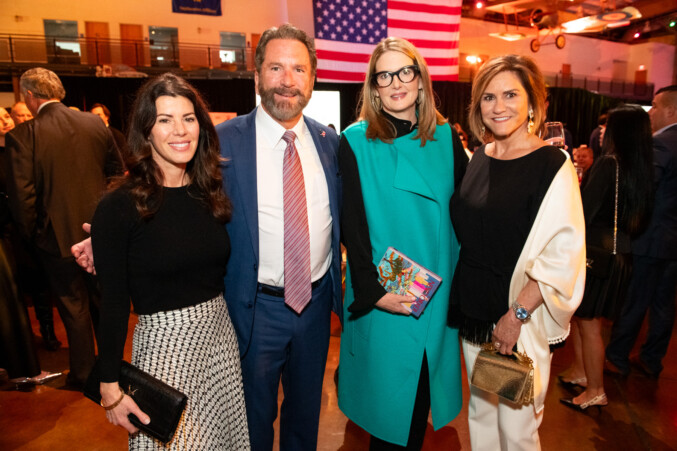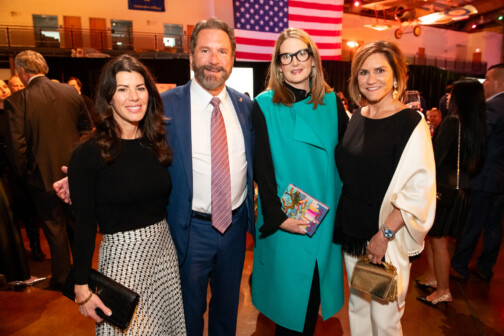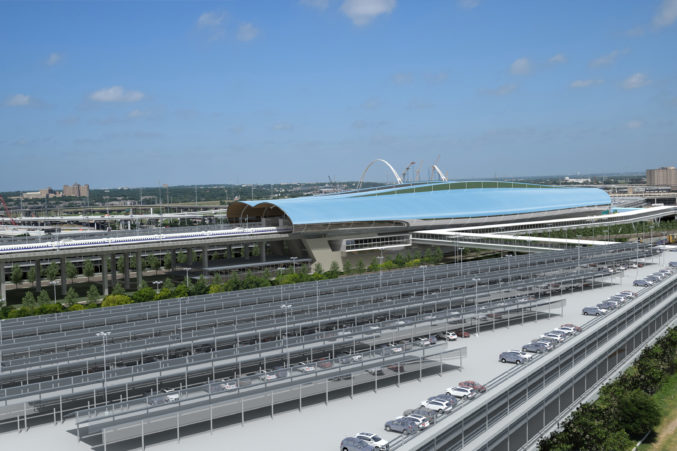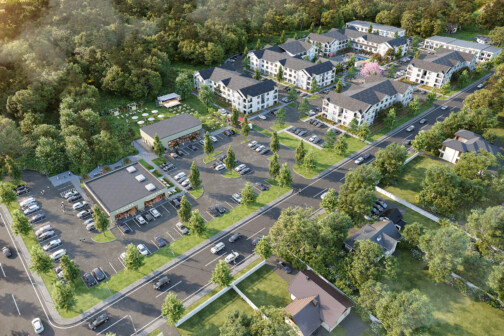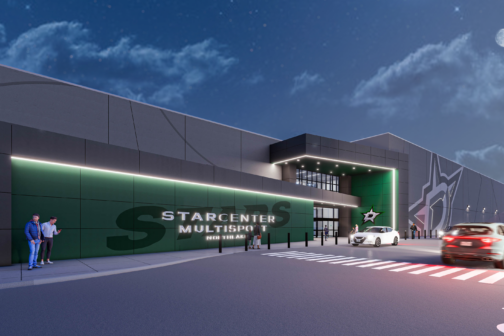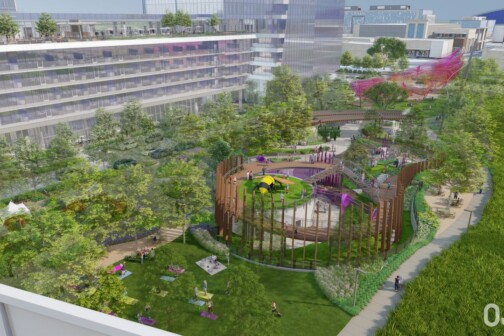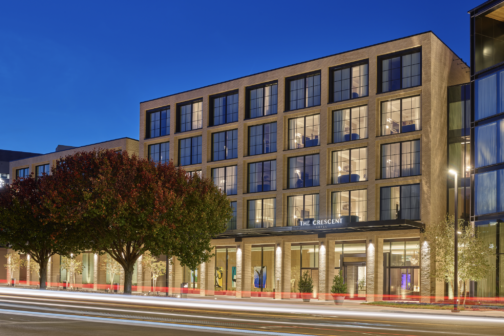

With major projects that span multiple sectors and submarkets, Billingsley Co. has grown to become a powerful real estate development force in North Texas. It’s led by land guru Henry Billingsley, his wife Lucy Billingsley (daughter of industry icon Trammell Crow), and their daughter, Lucy Burns, who oversees the firm’s office portfolio. RealPoints recently sat down with Burns and Lucy Billingsley to get details on the company’s new projects—including the 1,000-acre Cypress Waters development and the sixth phase of Austin Ranch, as well as Two Arts Plaza in the Arts District and high-profile land holdings in Far North Dallas. Billingsley Co. also is breaking out of its development mold by making and aggressively pursuing office and industrial buys. The conversation began with Burns; Billingsley joined in after wrapping up a phone call.
RealPoints: Tell me a little bit about your role in the company.
Lucy Burns: I joined in September of 2008, right when the meltdown was full throttle. Before that I was working in Los Angeles for a local developer, Ratkovich Co., rehabilitating a major office tower they had purchased. I did that for about two-and-a-half years, and then that project wrapped up, so it was a perfect time to make a segue over here. I oversee our office portfolio, leasing up our existing office product, property management, and working on build-to-suits—at this point, we’re not working on spec office. We finished a 175,000-square-foot building in January of 2009, so a lot of our time has been spent trying to get that building leased, as it came out at a rather inopportune time.
RealPoints: Which building is that?
Burns: 6100 W. Plano Parkway. It’s our first LEED Gold building. We’ve leased about 70 percent and we’ve got another deal that we’ll be getting done in the next several weeks, so we’ll have about 15,000 square feet left in a 175,000-square-foot building. The last year has really been fantastic.
RealPoints: What’s the current total size of your office portfolio?
Burns: We’ve got about 1.5 million square feet in Far North Dallas and about 500,000 square feet at One Arts Plaza. So about 2 million square feet. One Arts is totally leased. International Business Park, including the new building I was just telling you about, is about 90 percent leased. Minus that building we’re at 96 percent leased. We just acquired two new buildings up there (Landmark Center I and II), and we’re planning a full renovation of those. They total 250,000 square feet; about 70,000 square feet of that is leased. One building is completely vacant and the other is about 60 percent occupied.
RealPoints: So what led you to acquire those buildings?
Burns: Good location. Great visibility from the Dallas North Tollway, great access. The buildings don’t have any signs on them now, so we’ll be able to provide signage to whoever leases them.
Lucy Billingsley: And they’re wonderful buildings. Great spaces in them. All they need is freshening up and hard marketing. It’s a fabulous location, there’s robust infrastructure, and there are a ton of amenities all around. They’re next to the four corners of the George Bush Turnpike and the Tollway.
Burns: Basically we need to clear the landscaping around them, and once we go in and fix up the lobbies they’ll have a completely new look. Right now it’s a bit of a struggle; the lobbies are a little dated.
RealPoints: Do you have an idea of how much you’ll be investing in the spruce up and when they’ll be ready?
Burns: We’ll finish in the fall of this year and I’d expect that we end up spending $500,000, something like that.
Billingsley: All on cosmetics, all on look.
RealPoints: What’s the largest contiguous space you have available at Landmark Center I and II?
Burns: 145,000 square feet. And that’s one single building, essentially. The other building has some vacancy. We can go as high as 200,000-square-foot tenant between those two buildings. And there are not a lot of options in that product type in that area, with that kind of vacancy available. There are other buildings closer to LBJ Freeway that are higher rise and have lower parking ratios, just kind of a different product type, not as efficient layout. And closer to LBJ is a negative. North of State Highway, there’s nothing with this kind of square footage off the tollway. The floorplates are 67,000 square feet and the parking is five per 1,000.
RealPoints: Is parking becoming a bigger issue for tenants?
Billingsley: Yes. We’re really seeing that the parking requirements are just increasing and increasing and increasing. And it’s not call centers, it’s just the way people are living in their offices. Tenants are looking for high density but great spaces. It’s like living in a townhome community; you have all sorts of parks and amenities, but you’re dense when you’re together. Offices have loads of conference rooms and seating areas and public areas—they’re wonderful spaces to be in, in contrast to the cubes of days gone by, where they were dense but miserable.
Burns: So many companies are focusing on their employees in a way that they haven’t before, paying attention to things like natural light being available to everyone, a lot of the companies that have built out space in our newer buildings up north are all doing the same thing—it’s interesting. Their conference rooms are all in the interior, the walls are floor-to-ceiling glass. It makes an enormous difference and it looks good.
RealPoints: At this point, how much land do you have left to develop up north?
Burns: International Business Park is 300 acres and you could fit five or maybe six new buildings out there. We also own 73 acres at the northwest corner of Bush and Midway. It’s designed to be six buildings; nicer, five-story buildings with structured parking, as opposed to two-story, surface park. The goal is to be more campus-oriented. We also have the four corners of George Bush and the Tollway, which is about 33 acres combined. (Click on images for larger versions.)
- Five-building corporate campus planned for the northwest corner of Midway Road and the Bush Turnpike.
RealPoints: How long have you owned that property?
Billingsley: Before the Bush Turnpike and before the Tollway. Henry had bought the land out there. He knew the tollway would be coming through; he didn’t know if Bush would be coming through or not. We owned three of the four quadrants for a while and more recently bought the fourth. It’s an unusual thing where a single developer owns all four corners (of such a high-profile intersection). We’ve designed it to be a major gateway.
RealPoints: When will development get under way?
Burns: It will be market-driven. My sense is right now that our focus will be on build-to-suits or landing a tenant and kicking off a building. Bush-Midway or IBP seems to be more the product type for where the market is today. But certainly there are big fish in the market, and whenever someone is searching, we’ll do our best to get in front of them. On the office side, our focus for now is going to be on build-to-suits and buying buildings that are distressed.
RealPoints: And commercial property acquisition is rather new for you guys, isn’t it?
Burns: Yes. Landmark is the first acquisition we’ve made in a long time.
RealPoints: And you plan to do more of it?
Billingsley: Absolutely. Marijke Lantz has joined us as senior vice president of investments, leading our acquisition efforts. We’ve done two buildings in Dallas, a warehouse and industrial note in Los Angeles, and are actively pursuing other options right now. We’re looking in Dallas, Houston, and L.A., both office and industrial, as well as raw land, of course, our roots.
RealPoints: So what about Two Arts Plaza?
Billingsley: Two Arts Plaza is a huge opportunity. There’s going to be a major migration of leading corporations and law firms from south of Ross Avenue to the Arts District and Uptown. It’s just a matter of what’s the right timing, what’s the right pricing, construction costs.
Burns: My sense is that it’s going to be like a tidal wave. When you look at the list of expirations, there are a lot of huge leases expiring in 2015 and 2016. There are a couple in 2013 but really the big wave is 2015 and 2016. So they’re going to need new space.
Billingsley: And they need to be a part of tomorrow, not yesterday. So, we’re not too sure of the exact timing. Needless to say we are ready to go and eager to get launched.
Burns: We’re responding to all of the RFPs out in the market right now and working it as much as we can.
RealPoints: Are parking requirements an issue?
Burns: It’s interesting. One of the major trends in office development in the last few years is a major increase in efficiency.
Billingsley: It’s a wonderful thing for density. If you’re more dense, you’re more green.
Burns: Certainly in Far North Dallas you’re having to build to higher efficiency, without question.
Billingsley: And here, too. Two Arts is more dense than One Arts. And in One Arts, both 7-Eleven Inc. and Thompson Knight have active use of a shared shuttle to the DART station, and ridership is strong.
Burns: Ultimately, if you need eight-per-1,000, you’re not going to be in Uptown. Land would have to be cheaper to accommodate that.
RealPoints: So how are things going on the multifamily side?
Bilingsley: We’re launching Austin Ranch’s sixth phase, and we’re thrilled about that. We have some exciting ideas on the buildings and the amenities. We’re building a beautiful flat iron building, there will be a wonderful courtyard and a swimming pool that’s 18 feet wide and 200 feet long. We’re also going to have organic gardening and a major park area. The amenities are very rich.
Burns: It’s so interesting to see how quickly trends change. The first phase was in 1999, and this next phase will be done in 2013. Back in 1999, people wouldn’t have cared about organic gardening; today, if you aren’t growing your own tomatoes…
RealPoints: How many units will be in this sixth phase?
Bilingsley: 550, which will take the total to 3,000.
RealPoints: What about Cypress Waters? (Note: Cypress Waters is a 1,000-acre project within a City of Dallas satellite tract between Coppell and Irving. It sits within Coppell ISD.)
Billingsley: Yes. It’s the land we have at Belt Line and LBJ Freeway. We plan to start our utility work by Oct.1 and the multifamily first phase by Nov. 1. That’s going to be even a bigger development. Most apartments are probably 300 to 350 units in a phase, but this is 1,000 acres of land and it will grow to be something quite significant. So we’re going to start out with 650 units. It’s going to be a great launch.
RealPoints: What will it involve?
Billingsley: It’s actually three different neighborhoods under one first launch. There’s a townhome neighborhood called Parsons Green. Scotch Creek will be contemporary Texas-style buildings, and Sycamore Park is the big, red brick, we call it romantic industrial buildings. So it’s three different neighborhoods, all done in concert and in relationship to the commercial development we’re also eager to begin. The lake eventually will be lowered, but it will still be huge. We hope to be able to have many different neighborhoods that will evolve, with different architectural styles and amenities but of course preserving consistent quality.
Burns: One of the interesting things about growing these communities is the lack of entrances, or gateways. It just makes expansion feel natural and unforced.
Billingsley: The parking is all scattered and the blocks are laid out like single-family living, and the pocket parks all around. We’re going to have a children’s music park. This multifamily is so much fun.
RealPoints: When will the first units be ready for occupancy?
Billingsley: In January 2013.
RealPoints: Are there any other multifamily projects in the works?
Billingsley: We’re working on some others, but Austin Ranch and Cypress Waters are the two we know we’re moving on.
RealPoints: Okay. Let’s shift to the industrial sector.
Billingsley: Well, we have Dallas and Houston and Chicago. Dallas and Houston are about 5 million square feet. We have really grown in recent years through doing build-to-suits. The industrial market has had its lull as well, construction costs have not gone down enough and rental rates have not gone up enough to justify spec construction. Even today you have tenants that have clearly grown, clearly need more space, but are only doing short-term deals because they’re a bit tenuous. That being said, it seems like the manufacturing business in America is becoming more robust. If you talk to executive search firms, they’re hiring in that area. All of that bodes well. In real estate, it all comes down to one word: jobs. So we’ve got to see that job growth.
RealPoints: What about Billingsley as a company? You’ve made some new hires, so you’ve been growing.
Billingsley: That’s right. When we entered into this recessionary moment, like everyone else we asked how do we recalibrate, and how do we position ourselves to come out of this much stronger. Part of that is through acquisitions, getting new asset positions, and part of that is by bringing on great talent. Along with Marijke, Michael O’Hanlon joined us as president of Billingsley Co. So, we feel we are well positioned for growth. We have a team that’s well entrenched.
RealPoints: What’s your general outlook for the North Texas market?
Burns: It’s positive, and I think it’s just continuing to improve. I had lunch with some brokers recently and asked them about the deals they’re working on, and all of them had expansion projects, which means growth in this market.
Billingsley: We’ve had major leases from California.
Burns: That’s right, at International Business Park we’ve had a lot of California relocations, and they’ve been sizable. I think we’ll continue to see a lot of that, and also from the East Coast. The cost of doing business and living here, other states can’t compete.
Billingsley: It has always been true, but it is especially true today, that the Texas can-do spirit, quality of life, hard work ethic—we’re better positioned than anyone else in the country. You see core markets like New York and Washington, D.C. swinging way up. We’ll they’re just going for another ride. We are much more safely positioned for the long term.
Burns: They’re seeing job growth in both of those markets, but the rate at which those prices are rising and cap rates are dropping is not at all in tandem with where they ought to be. Here it is much more balanced.
Billingsley: Another interesting trend here is that we have definite submarkets that are reaping all of the benefits. Far North Dallas is strong, Preston Center is strong, and Uptown and the Arts District have gained tremendous strength. It seems to me that companies are valuing the amenities around the offices more than they had in the past. It’s all about quality of life.
Burns: There really is a lot more attention being paid to employees. We definitely see that. In Far North Dallas, for example, Legacy is an amenity that spreads far beyond its borders. It’s really an amenity for everyone north of State Highway 190.
Billingsley: We have been in a lot of meetings where corporate executives care not only about their employees, but the brand of the company and how the building and the location and the design reflects on their brand. That’s leveraging real estate. In multifamily, we can do all the right things to make a community rich. But in offices, we have historically experienced much more focus on the price and not on the employees’ experience or interiors or whether it’s green and the amenities. I think those things have become much more important, and the change is exciting. In the LEED Gold building we developed at International Business Park, I’d say half of the tenants have come because of that certification, and that’s a bigger percentage than what we anticipated. They want their space to reflect the values of their employees.
Burns: For larger companies, doing a LEED-certified building is a requirement; it’s not optional.
Billingsley: And the cost to make a suburban building gold is tiny; it’s not like a high-rise where the infrastructure is totally different.


4 comments
[...] more at http://realpoints.dmagazine.com/2011/08/conversation-with-lucy-billingsley-and-lucy-burns-billingsle... Advertisement GA_googleAddAttr("AdOpt", "0"); GA_googleAddAttr("Origin", "other"); [...]
Cypress Waters is in the City of Dallas, not Coppell as reported in the first paragraph.
[...] more at Billingsley’s portfolio & plans at DRealPoints Like this:LikeBe the first to like this [...]
[...] include our “Conversation With” series, in-depth Q&As with executives such as Lucy Billingsley, David Pinsel, and the top three at CBRE; and detailed reports on event presentations (see Craig [...]